
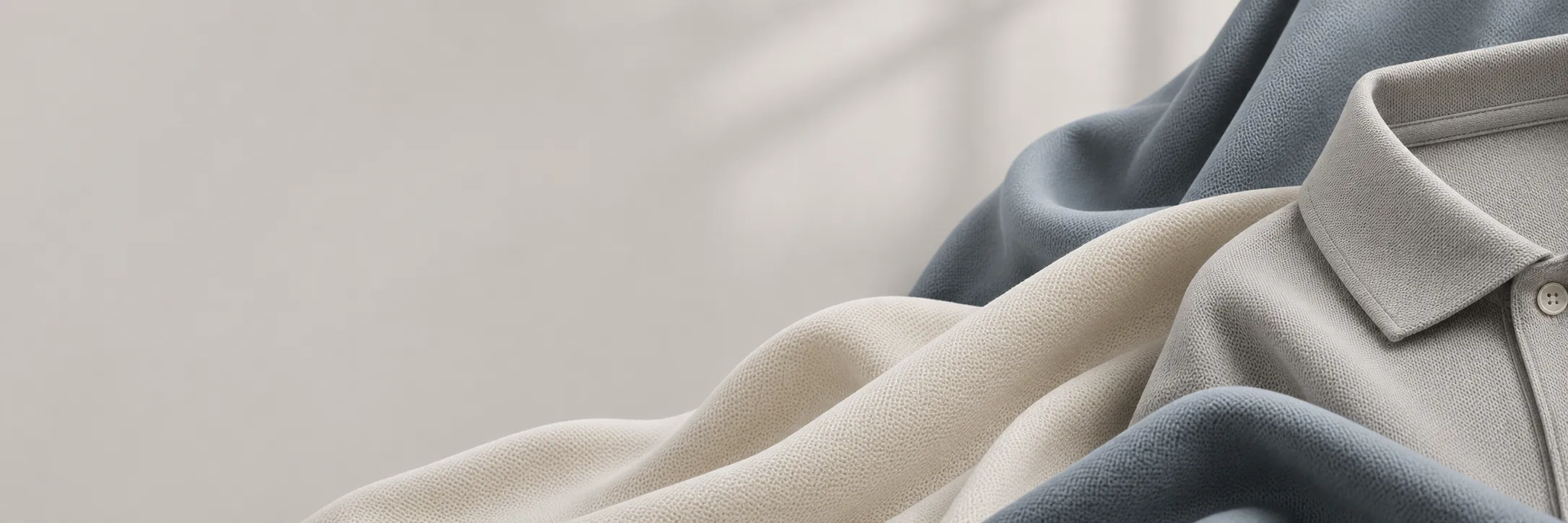
Fabric swatches make an apparel conversation more concrete. A small piece of material helps a buyer examine texture and color, while a complete garment sample shows how that material behaves in a finished polo. These references serve different purposes. Treating either as a complete answer can lead to assumptions about composition, fit or performance that the supplier has not confirmed.
A good comparison starts with intended use and keeps observations separate from verified specifications. This guide provides a practical review process for corporate polo projects. It does not assign laboratory results to a fabric or suggest visual inspection proves a technical claim. Instead, it helps you ask clearer questions and decide what additional information the project requires.
Define the conditions the fabric must suit
Describe the environment where the polo will be worn. Consider whether work is mainly indoors, whether employees move frequently and what other garments they wear. Include the desired impression as well as practical concerns. A fabric feeling appealing at a desk may be judged differently after a full working day or beneath an outer layer.
Separate essential requirements from descriptive preferences. If composition must meet a purchasing rule, request actual composition information. If the goal is a softer hand feel, explain that preference and compare samples. Clear language prevents a tactile description from being interpreted as a guarantee. Identify any requirement needing evidence before deciding that a material is suitable for the intended order.
Label each swatch before comparing it
Assign a reference to each swatch and connect it with the product style, supplier description and date received. If a fabric appears in more than one garment, ask whether the swatches represent the same specification. Similar colors or textures do not establish that materials are identical. An organized label makes the comparison easier to revisit.
Keep the reference visible in photographs and comments. A note saying the blue sample feels softer is difficult to use when several blue options are present. A reference number, product style and specific observation help purchasing and the supplier discuss the same material. Retain the original label when the sample is passed between different departments.
Separate composition from hand feel
Cotton-feel describes a tactile impression, not a verified cotton percentage. Likewise, a smooth appearance does not identify the fibres. Request confirmed composition information for the selected style when this matters to the order. Do not fill missing percentages from a similar product or from a general fabric name used in a catalogue.
Record tactile observations in their own column. You might describe a surface as soft, crisp, textured or smooth. These observations help colleagues compare preferences, but should remain separate from supplier-confirmed composition. This is particularly useful when people use the same descriptive word differently. If the project requires a specific declaration, ask which documentation is available instead of inferring it from touch.
Compare construction and visible texture
Examine both sides under consistent lighting. Mesh construction influences the visible surface and can affect how small artwork appears against it. Square and hexagonal mesh descriptions are starting points, but the sample shows how prominent the pattern is at the scale wearers will see. Inspect the material without stretching it beyond normal handling.
Take a close-up and a normal viewing-distance photograph if photography matters to the project. Texture looking subtle in daily use may appear pronounced in a close-up. Keep the images as visual references without treating them as proof of breathability or another measured property. Explain whether the photograph is intended to record texture, color or an area requiring discussion.
Read fabric weight in context
GSM describes mass per unit area. It does not describe a complete shirt’s weight and cannot independently rank every fabric from poor to excellent. Materials with the same nominal weight can differ in texture, drape and feel. Ask whether the stated value applies after dyeing or finishing, and confirm the selected product’s specification.
YUNFAN’s materials include style-specific weights, so compare each figure with its own product details. Avoid assuming the highest number is automatically right for a team. Use swatches and garment samples to assess the desired result. Keep the confirmed weight beside the relevant style and fabric reference so that a later conversation does not accidentally mix specifications from different products.
Review color under consistent lighting
Place swatches together in a stable lighting environment. Colored walls, mixed light sources and changing daylight can complicate comparisons. Where brand color matters, use an agreed physical reference rather than relying only on a phone image. A digital color value and a dyed textile are different kinds of reference and should not be treated as equivalent.
Document which color reference is being approved and what it applies to. A swatch may guide garment color without establishing embroidery thread or printing color. Ask how a later batch will be compared with the approved reference. A photograph supports communication but does not remove the need to discuss reasonable variation and the basis for evaluating it.
Examine opacity and drape sensibly
Handle the swatch gently and observe how it falls without forcing an unnatural shape. A small piece gives an initial impression of drape, while a finished garment provides more useful information across the body. If appearance under lighting is a concern, assess the garment in the setting where employees will actually wear it.
Avoid absolute opacity claims based on a staged photograph. Color, lighting and fit change the impression. Describe the situation the shirt needs to suit and request an appropriate sample review. This leads to a more meaningful discussion than judging every color from one white or dark swatch. Make sure the review includes the colors your project is considering.
Discuss stretch expectations clearly
A fabric feeling flexible in the hand does not establish every kind of stretch a buyer expects. Ask how the material is described and which properties are specified. If movement matters, evaluate a suitable garment during normal activities rather than relying only on pulling a loose piece of cloth. Share the activities involved with the supplier.
Keep handling consistent between swatches. Different forces make informal comparisons misleading. Purchasing should not turn an unmeasured impression into a numerical requirement. Where a technical property matters, discuss an appropriate verification method instead of inventing a figure from a casual demonstration. Record the agreed scope of any review so everyone understands what the observation does and does not establish.
Connect the fabric review with decoration
Bring the intended artwork into the comparison. Fine outlines and small lettering may interact differently with a textured surface than a smoother material. Discuss embroidery or printing for the actual fabric and requested size. A generic decoration sample on another material can demonstrate a style without approving the result on your polo.
Review the proposed decoration on a representative garment or sample area where appropriate. Confirm whether it is for appearance only or part of production approval. Note changes to size, placement or detail and connect them to the fabric reference. This prevents the artwork and material decisions becoming separated when the order is passed to another contact.
Confirm care information before evaluating durability
Obtain care guidance for the product and decoration. Informal washing is hard to interpret when reviewers use different temperatures, detergents or drying methods. Agree what the trial is meant to assess and record the conditions. A review may identify questions, but it does not create a certified result or support every possible claim about durability.
Avoid promising employees a care method before confirming finished garment instructions. Decoration may introduce considerations beyond undecorated fabric. If the organization has particular laundering requirements, state them during sourcing so suitability can be assessed. Share observations from any review in clear language, distinguishing visible changes from assumptions about their cause.
Build a balanced comparison record
Use a matrix containing swatch reference, confirmed composition information, nominal weight, color reference, texture and wearer observations. Include unresolved questions instead of forcing every column to contain an answer. An honest field marked for confirmation is better than a guessed specification that later appears authoritative. Date the sheet and identify the person consolidating feedback.
Ask stakeholders to review the same references. Wearers may focus on feel, marketing on color and artwork, and purchasing on supply information. Consolidate these observations into one record to reduce conflicting approvals. Keep practical preferences visible, but distinguish them from requirements that must be confirmed before the buyer can proceed.
Keep the references available after the decision
Store accepted swatches where the relevant team can retrieve them, and label any rejected options so they cannot be mistaken for current approvals. Note which person holds a physical reference when several departments participate. If the reference is damaged or no longer available, explain that limitation during the next inquiry instead of assuming a supplier can recreate the original comparison from a compressed photograph. A small amount of reference management makes future questions much easier to resolve.
Move from swatch to garment approval
Approving a swatch does not approve collar, fit, seams, buttons or logo position. Identify the next review and confirm which references guide it. Keep the accepted swatch with garment information where practical, especially for likely repeat orders. Explain any remaining differences between the reviewed material and the intended finished product before giving a final approval.
When contacting YUNFAN, share the preferred style, use, quantities, colors and artwork. Ask about sample options and confirm charges and timing before proceeding. A structured swatch review helps you choose with greater clarity while keeping the final decision connected to the garment and agreed order details. Retain the record for later questions instead of relying on a photograph alone.
Explore customization · View all products · Discuss your project